Energy Efficiency Engineering
With the proliferation of electronic ballasts in fluorescent lighting, variable frequency drives for motors, “efficient” power supplies for computers and monitors, etc., we no longer enjoy 60 Hz sine-wave power from the utility. If you look at the waveform of your incoming power (need a special instrument for this) you would most likely see a wave form that looked more like the pictures on the left, instead of the picture at the right, which is what we are all suppose to be getting from the electric utility. The problem is that each year, more and more of the equipment we install in our facilities actually distorts the power and this can have a disruptive affect on both your operations and your utility bill, causing you to pay more than you should. In the pictures below, the first and second pictures show the kinds of distortion we typically see at the utility/facility power connection while the third picture shows a normal 60 Hz sine-wave coming from the utility.
Thermal Analysis
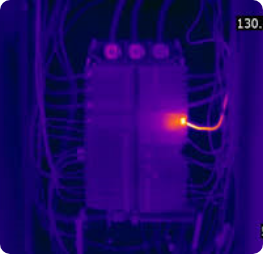
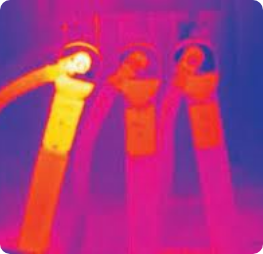
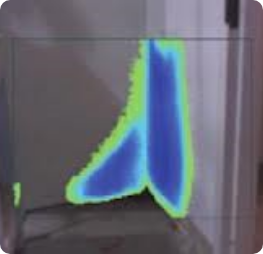
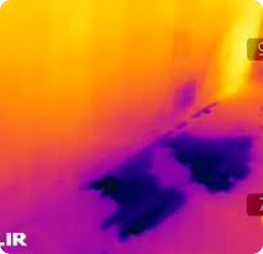
Quite often problems exist with equipment, wiring, breaker panels, roofing, building envelope and other areas where the problems are hidden from view. The easiest thing to envision is an overloaded wire or electrical connection. Infrared (IR) camera’s are the perfect answer for hidden problems that are related to electricity or natural gas, moisture, friction, or temperature. IR scans are easily accomplished without any disruption to operations. The first two photos show overloaded connections while the next two photos show damaging trapped moisture.
Motor Analysis
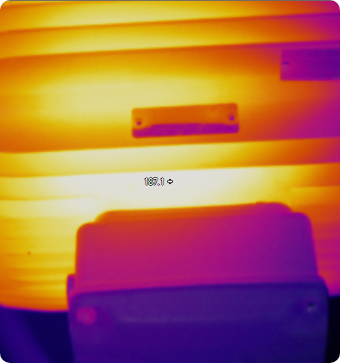
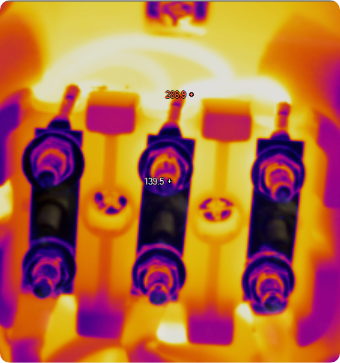
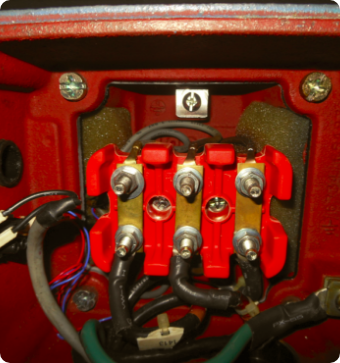
Motors often represent a huge investment in manufacturing companies and yet, we rarely encounter a Preventative Maintenance Program for motors. A big hurdle to building such a program is that motors need to be studied or analyzed while they are running in order to understand their operating condition, and there are very few people who are both willing and qualified to investigate a large motor when its running. To do it properly, there are four (4) areas that need to be evaluated, 1) thermal/infrared analysis (IR), 2) vibration analysis, 3) tachometer or shaft speed analysis and 4) electrical power input or drive analysis. These four areas require sophisticated equipment and deep expertise to gather meaningful information about each motor in order to understand its condition. After investigating, we classify each motor as red (replace/repair immediately), orange (replace/repair at earliest opportunity, yellow (replace/repair sometime in next 12 months, and green (no issues found). Each motor also receives a detailed review of all information collected. Below shows an example of a hidden problem with a motor. The first IR photo shows bright area near the power connection box. The second IR photo shows why. The top wires on the terminal block are clearly overloaded. The third shows the severe discoloration on the wire insulation. Initially, this motor was viewed by plant maintenance to be running normally because their power meter indicated power was less than or equal to the motor rating. However, with more sophisticated equipment, we were able to detect a severe phase imbalance and the presence of large negative-sequencing harmonics, which reduced output power but caused an overload condition on the input.